
Non Woven Fabric
What is Non Woven Fabric
Non-woven fabric is a type of fabric or material that is created by bonding fibers together, rather than weaving or knitting them together. The fibers can be made from natural or synthetic materials like polyester, nylon, or rayon. Non-woven fabric is a popular choice for a wide range of applications where durability, strength, and water-resistant properties are necessary. The use of non-woven fabric is popular in products like shopping bags, face masks, surgical gowns, and automotive interiors.
Benefits of Non Woven Fabric
Versatility
Non-woven fabrics are incredibly versatile, with a wide range of types catering to diverse applications. Their properties can be tailored to suit specific needs, making them suitable for industries as varied as healthcare, agriculture, automotive, and fashion.
Cost-Effectiveness
The manufacturing processes for non-woven fabrics often involve fewer steps compared to traditional woven fabrics. This can lead to cost savings in terms of labour, time, and energy. Additionally, non-woven fabrics are available in rolls, enabling bulk production and reducing overall costs.
Enhanced Properties
Different types of non-woven fabrics possess unique properties that set them apart. For instance, spunbond non-woven fabric offers high tensile strength and dimensional stability, while meltblown fabrics exhibit exceptional filtration capabilities. These specialised properties make non-woven fabrics suitable for specific applications where these traits are crucial.
Eco-Friendliness
As sustainability becomes a central concern, non-woven fabrics have gained attention for their eco-friendly attributes. Many non-woven fabrics are recyclable and can be repurposed for other applications. Non-woven fabric bags, for example, have become a popular alternative to single-use plastic bags, contributing to reduced plastic waste.
Ease of Production
Non-woven fabrics can be produced relatively quickly using automated machinery. This efficiency in production translates to shorter lead times and quicker response to market demands. The ability to rapidly adapt to changing requirements is a significant advantage in industries with dynamic needs.
Lightweight and Comfort
Non-woven fabrics are known for their lightweight nature, which makes them comfortable to wear and use. They are often preferred for applications like medical gowns, face masks, and apparel where comfort is of paramount importance.


Why Choose Us
Professional Team
We have a team of skilled and experienced professionals who are well-versed in the latest technology and industry standards. Our team is dedicated to ensuring that our customers get the best service and support possible.
Competitive Prices
We offer our products at competitive prices, making them affordable for our customers. We believe that high-quality products should not come at a premium, and we strive to make our products accessible to all.
Rich Experience
Has a long-standing reputation in the industry, which makes it stand out from its competitors. With over many years of experience, they have developed the skills necessary to meet their clients' needs.
R & D Team
We take quality and credibility as the factory's survival. Customers and quality always come first. Welcome to contact us for a win-win situation.
Quality Assurance
In terms of quality assurance, the company strictly follows the standards and norms of the industry quality system. Adopt industry-leading testing equipment to ensure product quality and good reputation.
Professional Service
We can accept factory inspection and goods inspection at any time. Technical discussion, research and development of new products, and complete after-sales service.
Innovation in Non-Woven Fabric
Sustainability and Recycling
Sustainability has become a focal point for industries worldwide. Non-woven fabric manufacturers are actively researching and implementing methods to make their products more sustainable. This includes using biodegradable or recycled materials, as well as developing processes that minimise environmental impact. The ability to recycle certain types of non-woven fabrics adds to their appeal as an environmentally conscious choice.
Smart Non-Woven Fabrics
Advancements in materials science and nanotechnology have paved the way for the development of smart non-woven fabrics. These fabrics can incorporate sensors, electronics, and even microprocessors, enabling functionalities like temperature sensing, moisture management, and data transmission. Such innovations are particularly valuable in fields like healthcare, where real-time monitoring of patients' conditions is crucial.
Integration of Non-Woven Fabrics in Fashion
Non-woven fabrics are making their mark in the fashion industry as well. Designers are exploring the unique properties of these fabrics to create avant-garde garments that challenge traditional notions of texture and structure. The lightweight nature of non-woven fabrics, along with their ability to be moulded and shaped, opens up endless possibilities for creating garments that push the boundaries of design.
Addressing Challenges
While non-woven fabrics offer a multitude of benefits, they also face challenges that manufacturers and researchers are actively working to overcome. Achieving consistent quality across different production batches, improving the recyclability of certain types of non-woven fabrics, and enhancing the breathability of some variants for specific applications are areas where ongoing research is taking place.
Different Types of Non-woven Fabrics Over-View
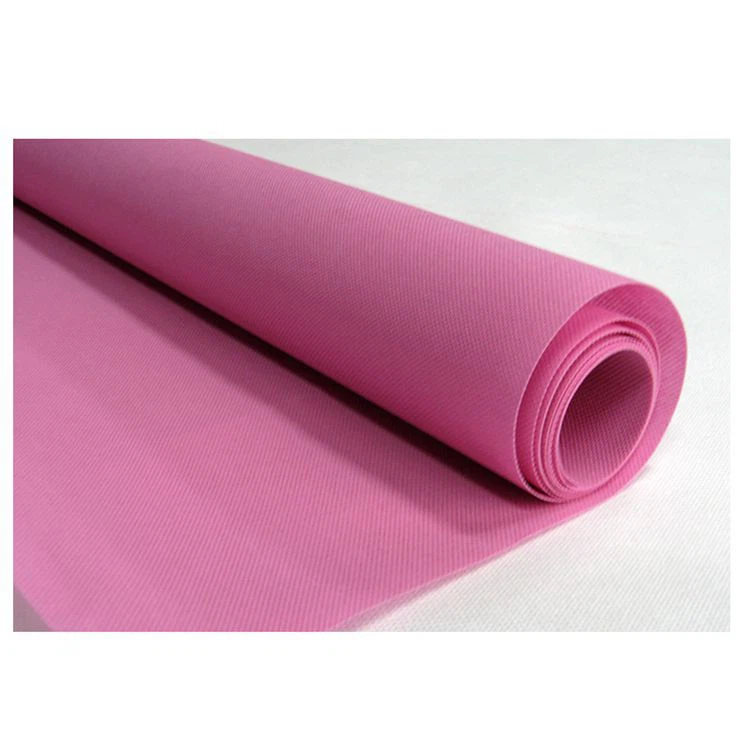


Spunlace Nonwovens
It is a non-woven cloth, it is the direct use of polymer slices, short fibers or filaments into a network of fiber by air or mechanical, spunlace, acupuncture, or hot-rolled reinforcement, and finally after finishing the formation of spunlace nonwoven fabric.
Heat-bonded Nonwoven Fabrics
This type of non-woven fabric is mainly manufactured in several processes: Adding fibrous or sticky reinforcement material into the fiber network, and then reinforcing the network into cloth via heating and cooling.
Pulp Air-laid Nonwovens
Air-laid nonwovens can also be called the dustless paper or dry paper nonwovens. It uses the air-laid technology to open the wood pulp fiberboard into a single fiber state, then uses the airflow method to make the fiber agglomerate on the net curtain, and then consolidates the fiber web into cloth.
Wet-laid Non-woven
The manufacturing process of wet nonwoven fabric goes like this: Open the fibrous raw material in the aqueous medium into single fibers, meanwhile forming a fibrous suspension slurry by mixing different fiber raw materials, then transport the suspended slurry to a mesh-forming mechanism, and the fibers are laid in a wet state to form a cloth.
Spunbond Nonwovens
Spunbond-type of nonwoven fabric is processed as follows: Extrude and stretch the polymer to form a continuous filament, laid the filament into web, then process the web into nonwoven fabric through their own bonding, thermal bonding, chemical bonding or mechanical reinforcement methods.
Meltblown Nonwovens
Melt-blown nonwoven fabric is manufactured by extruding melted polymer fiber through a linear die containing several hundred small holes to form long thin fibers which are stretched and cooled by passing hot air as they fall from the linear die, then the resultant web is blown onto a collector screen forming fined-filtered, self-bond nonwovens. Usually, this type of nonwoven fabric is added to spunbond in order to form SM or SMS webs.
Stitch Nonwovens
Stitched nonwoven is another type of dry nonwoven fabric. The manufacturing process uses a warp knitted loop structure to reinforce the fiber web, yarn layer, non-woven materials (such as plastic sheeting, plastic foil and etc.) or a combination thereof so as to form a nonwoven fabric.
The Difference Between Medical Non Woven and Ordinary Non Woven
Multiple Antivirus Compatibility Of Medical Non Woven
Good medical non woven fabrics need to be applied to various anti-virus methods at the same time, preferably choosing pressure steam method, ethylene oxide method and hydrogen peroxide method. Common non-woven fabrics have not been disinfected.
The Anti-virus Effect Of Medical Non Woven
Medical non woven fabrics generally have a three-layer SMMMS meltblown layer structure. Common medical non woven fabrics in the industry use a single-layer SMS melt-blown layer. In contrast, the anti-toxicity of a three-layer structure is better than that of a single layer. The common non woven fabric is not for medical use, so there is no melt-blown layer in the middle and no antivirus effect.
Medical Non Woven Is Environmentally Friendly
High-quality medical non woven fabrics use PP environmental protection particles. It is recommended that reports related to health and toxicology requirements be issued. However, ordinary non-medical non woven fabrics cannot withstand high humidity conditions and certainly do not require toxicology reports.
Strict Quality Control Of Medical Non Woven
The production process of a high-quality medical non woven fabric needs to pass the ISO13485 international medical product quality management system certification, and conduct real-time online inspections at every step of the production process. This ensures that each non woven fabric is sent to the quality inspection department and has a related batch inspection report. However, ordinary non-medical non woven fabrics do not need to be tested at the medical level.
Keep it clean and wash it frequently to prevent mites from breeding.
When storing in seasons, it must be washed, ironed and dried to be sealed in a plastic bag and placed flat in the closet. Pay attention to shading to prevent fading. It should be ventilated frequently, dedusted and dehumidified, and not exposed to the sun. Anti-mold and anti-mite tablets should be placed in the closet to prevent cashmere products from getting wet and mildewed.
The inner lining of the outer garment should be smooth when worn inside, and the hard objects such as pens, key cases, mobile phones, etc. should be avoided in the pockets to avoid local friction and pilling.
Minimize friction with hard objects (such as sofa backs, armrests, and table tops) and hooks when wearing them. It is not easy to wear for too long, and it must be stopped or replaced in about 5 days to restore the elasticity of the clothes to avoid damage to fiber fatigue.
If there is pilling, do not pull it hard. Use a pair of scissors to cut the pompom to avoid being repaired due to off-line.
Exploring the Versatile Applications of Non-Woven Fabric
Medical Applications
One of the most important applications of non-woven fabric is in the medical industry. Non-woven fabric is often used to create surgical gowns, masks, and other medical equipment because it can provide a barrier against fluids and bacteria. Non-woven fabric is also hypoallergenic and gentle on the skin, making it an ideal material for use in medical settings.
ltration
Another important application of non-woven fabric is filtration. Non-woven fabrics are often used to create air and liquid filters due to their ability to trap particles and pollutants. These filters are used in various applications, from home HVAC to industrial air filtration systems. Non-woven fabrics can also be used in water filtration systems to remove impurities and bacteria.
Home Furnishings
Non-woven fabric is also commonly used in home furnishings. Non-woven fabrics can be used to create various products, including curtains, drapes, and upholstery. Non-woven fabrics are often preferred for these applications due to their durability, breathability, and ease of cleaning.
Automotive Applications
Non-woven fabric is also used in a variety of automotive applications. Non-woven fabrics are often used as insulation and soundproofing materials in cars and trucks. They can also be used in seat covers and headliners due to their durability and resistance to wear and tear.
Agriculture
Non-woven fabric is also used in the agriculture industry. Non-woven fabrics can be used to create agricultural covers and weed barriers. These fabrics are often used to protect crops from pests and harsh weather conditions and to prevent weeds from growing in fields.
Packaging
Non-woven fabric is also used in packaging. Non-woven fabrics are often used as a substitute for traditional plastic packaging materials due to their ability to be recycled and their biodegradability. Non-woven fabrics can also create reusable shopping bags and other eco-friendly packaging solutions.
Industrial Applications
Non-woven fabric is also used in a wide range of industrial applications. Non-woven fabrics can be used as insulation materials in buildings and the construction industry. They can also be used to manufacture electronic devices to protect against static electricity.
Personal Care Products
Non-woven fabric is a popular choice for personal care products such as wipes, diapers, and sanitary napkins. This is because non-woven fabrics are soft and gentle on the skin, making them an ideal choice for sensitive skin. Non-woven fabrics are also highly absorbent, making them effective for use in products requiring high moisture absorption levels.
Geotextiles
Non-woven fabrics are also commonly used in geotextiles, which are porous fabrics used to improve soil stability, prevent erosion, and manage water. Geotextiles from non-woven fabric can reinforce embankments and retaining walls, prevent soil erosion on steep slopes, and protect drainage systems from clogging. Non-woven geotextiles are also used to construct roads and railways to stabilize and drain.
The raw materials used in non woven
Animal fiber wool
Various types of animal wool and hair are used in the textile industry to produce items. However, the production of wool as a non-woven material is highly valued. Generally speaking, sheep's wool is more expensive, so it is mainly used in the form of cuttings or recycled wool. However, there are different source restrictions on the use of wool due to impurities in the wool and differences in the quality and physical and chemical properties of the recycled wood.
Plant fibres
Cellulose is one of the most important plant fiber components and is hygroscopic and hydrophilic. In addition to this, there are several other substances in plant fibers that affect their properties. Another important plant fiber is cotton, which is often used in the production of non-woven materials.
Man-made synthetic polymer fibers
It has been recognized that the field of nonwoven bonded fabrics is very broad and includes to some extent different types of existing fibers. In some areas of nonwoven bonded fabrics, specific fiber types are becoming dominant. For example, the main fiber types are polyamide 6.6 (nylon) and polyamide 6 (perlon).
Other Types of Plastic
In the lifecycle of non-woven fabrics, there is little consumption of energy or carbon dioxide. Moreover, in the manufacturing process of polypropylene, there is no Bisphenol A. It is a chemical that worries people and health specialists for quite some time now.
With its lower density, polypropylene also requires less resin (up to 1/3 less) than other plastics to create any application. In this way, the production of polypropylene and its non-woven subsequent varieties reduce the quantity of non-renewable resources necessary in the manufacturing process.
Another reason why the non-woven fabric is more sustainable than other plastic varieties is the waste-management part of its lifecycle. Since it is reusable, recyclable, and less toxic than other materials, polypropylene and non-woven fabric lower the burden of waste management.
As an intermediary conclusion, non-woven tote bag and other items (we will discuss in the next moments) are not perfect from an ecological standpoint. Their fabrication process includes the use of both renewable and non-renewable resources. In terms of waste management, the world needs to be more conscious about recycling, even the everyday non-woven worn-out grocery shopping bag, etc. However, there is a reason why the non-woven fabric is among the most popular alternative materials out there when it comes to eco-friendly fashion.
How Is a Non Woven Fabric Made
The production process starts with the chemical process which involves using an adhesive to bond the fibers together, while the mechanical process uses needling, fluid jet entanglement, or stitching to bond or interlock the fibers. In the thermal bonding process, a powder, paste, or polymer melt binder is applied and melted onto the web by increasing the temperature.
Fluid fiber solutions made of chemical polymers can be shaped into flat sheets or films, which are used to make nonwoven plastics, pleather, and vinyl materials. These sheets can be used as is or adhered to knitted or woven backings.
Certifications
SGS certificate, ISO9001 quality management system, 14001 environmental management system, 18001 occupational health system and other certification

Our Factory
Wenzhou Jinxiang New Material Co., Ltd was founded in 2008, Jinxiang pack have passed ISO9001 quality management system, 14001 environmental management system, 18001 occupational health system and other certification, and have been rated as "national high and new technology enterprise", "Zhejiang science and technology SMES", "contract abiding and credit abiding" unit. In addition, relying one on the "one belt, one road" policy, our company actively implemented the "going out" strategy and was successfully listed on the Caribbean stock exchange in Holland at the end of 2019.

FAQ
We're professional non woven fabric manufacturers and suppliers in China, specialized in providing high quality customized products. If you're going to wholesale discount non woven fabric made in China, welcome to get free sample from our factory.
Pla Non Woven, Shopping D Cut Bag Non Woven, Collapsible Cooler Bag