
PLA Nonwoven Fabric
What is PLA Nonwoven Fabric
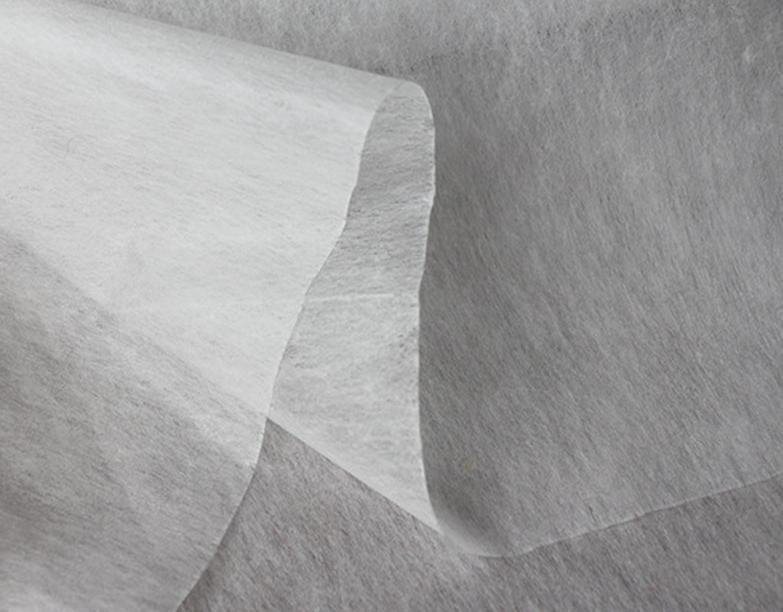
PLA nonwovens are made from PLA resin or fibers which are produced from bioplastics derived from natural sources like starch and sugar. Strong yet soft like traditional nonwovens. PLA fibers are very durable due to its 95% crimp resilience which is better than any other chemical fiber on the market.
Benefits of PLA Nonwoven Fabric
Environmental Protection
PLA Non Woven Fabric is 100% environmentally friendly and degradable. It can be directly decomposed into carbon dioxide and water by microorganisms in the soil in nature. The carbon dioxide and water produced by photosynthesis decomposition of plants in nature will not bring burden to the atmosphere or cause greenhouse effect, and it is 100% friendly to the environment.
High Performance
PLA Non Woven Fabric has excellent draping, smoothness, moisture absorption and air permeability, and has natural antibacterial property and weak acid affinity to skin, good heat resistance and resistance to ultraviolet radiation. On the basis of ensuring the strength of traditional non-woven fabric, PLA non-woven fabric also achieves softness and comfort. PLA fiber has excellent crimping and resilience, and its unique and outstanding performance has attracted the attention of the international market. The share of PLA biodegradable non-woven fabric in the market will continue to rise.
Wide Range Of Applications
PLA Non Woven Fabric combines the advantages of synthetic fiber cloth and natural fiber cloth, which can be completely degraded and applied in a wide range of fields. Such as clothing, home textiles, healthcare, agriculture, 3D printing and so on.


Why Choose Us
Professional Team
We have a team of skilled and experienced professionals who are well-versed in the latest technology and industry standards. Our team is dedicated to ensuring that our customers get the best service and support possible.
Competitive Prices
We offer our products at competitive prices, making them affordable for our customers. We believe that high-quality products should not come at a premium, and we strive to make our products accessible to all.
Rich Experience
Has a long-standing reputation in the industry, which makes it stand out from its competitors. With over many years of experience, they have developed the skills necessary to meet their clients' needs.
R & D Team
We take quality and credibility as the factory's survival. Customers and quality always come first. Welcome to contact us for a win-win situation.
Quality Assurance
In terms of quality assurance, the company strictly follows the standards and norms of the industry quality system. Adopt industry-leading testing equipment to ensure product quality and good reputation.
Professional Service
We can accept factory inspection and goods inspection at any time. Technical discussion, research and development of new products, and complete after-sales service.
Corn fiber (PLA), also known as polylactic acid fiber; has excellent drape, slipperiness, moisture absorption and breathability, natural antibacterial properties, mild acidity that reassures the skin, and good heat resistance and UV resistance.
This fiber does not use chemical raw materials such as petroleum at all. Its waste can be decomposed into fiber and water under the action of microorganisms in soil and seawater, and will not pollute the global environment.
Since the original raw material of fiber is starch, the recycling cycle of PLA in PLA non-woven fabrics is short, about one to two years, and the waste generated by plants in the atmosphere can be reduced through photosynthesis.
There is almost no pollution when burning PLA fiber, and its combustion heat is about one-third that of polyethylene and polypropylene. The PLA fiber in PLA non-woven fabrics uses natural renewable plant resources as raw materials, reducing dependence on traditional petroleum resources.
In line with the requirements of sustainable development of the international community, PLA in biodegradable non-woven fabrics combines the advantages of synthetic fibers and natural fibers. At the same time, it has the characteristics of complete natural circulation and biodegradability.
Compared with conventional fiber materials, corn fiber has many unique properties and has therefore attracted widespread attention from the international textile community.

Biodegradable PLA Nonwoven Fabric-Based Microfluidic Devices
Polymer and paper-based microfluidics have been widely used in biological and medical research. In this study, a new alternative material is proposed for the fabrication of microfluidic devices: biodegradable PLA (poly-lactic acid) nonwoven fabrics. Compared to polymer sheets and films, nonwoven fabric material is even more low-cost, flexible, and easy to process. Compared to paper-based microfluidics, nonwoven fabric material is mechanically more robust and provides a wider choice of chemical/physical properties with a cost in the same range. PLA nonwoven fabric is plant-sourced, which has a much lower carbon footprint in the fabrication of nonwoven fabric material compared to other petrochemical-sourced polymers. Due to the hydrophobic properties of PLA nonwoven fabric material, a layer of PVA (polyvinyl alcohol) was deposited and patterned on the surface of the PLA nonwoven fabric to enable fluid self-driven and fluid path control. For the demonstration of the proposed fabrication technique for PLA nonwoven fabric-based microfluidic devices, a microfluidic device for the testing of polyphenol in tea was also fabricated. The proposed fabrication method for PLA nonwoven fabric-based microfluidic devices could have wide application potential in chemical and point-of-care testing as an alternative to polymer or paper-based microfluidics.
Industrial And Agricultural Fields
PLA nonwoven fabric can be used in agricultural mulching materials, insect-proof nets, vegetable bags, nursery trays, films and ropes for construction, fishing nets kelp farming nets, fish lines, etc. It has air permeability and excellent light permeability, which can maintain the growing environment of plants and increase the yield.
Medical Field
PLA non-woven fabric is suitable for medical masks, surgical gowns, dressings, medical bandages, sutures for surgical medical use, medical device fixation materials, hygiene products, etc.. It has good breathability and comfort, and can effectively prevent infection.
Daily Life
It can be made into various kinds of tableware such as cups, plates, dishes, pots, pans, etc.
Electronic Appliances
Housing for electronics such as computers is also used for equipment working at high temperatures, such as LCD projectors, etc.
Packaging materials
PLA non-woven fabric is suitable for food container paper plastic film, pharmaceutical packaging, household garbage bags, packaging film, gift packaging, and so on. It has good waterproof, air permeability, and oil resistance, which can protect the quality and hygiene of the packaging.
Apparel field
Dyeable and biocompatible silk yarn knitted fabrics, nonwoven fabrics, and other garments.
Construction & Decoration
PLA nonwoven can be used for interior decoration materials such as wallpaper, curtains, carpets, etc. It does not contain harmful substances and has good durability and aesthetics.
PLA non woven fabric can be used for disinfection wraps, masks, diapers, civil wipes, wet face towels, beauty products, sanitary napkins, sanitary pads, and disposable sanitary cloths, etc. In addition, the polylactic acid membrane cloth is a new type of bio-based material, with soft hand feeling, strong adsorption, moisture, breathability, and antibacterial. It is a pure, safe, healthy, and high-quality biodegradable non-woven fabric that is close to the skin. It has many biological characteristics that other substrates cannot match. The PLA non-woven fabric is an ideal base material for high-quality facial masks.
The PLA Nonwoven Fabric Market size is expected to develop revenue and exponential market growth at a remarkable CAGR during the forecast period from 2023–2030. The growth of the market can be attributed to the increasing demand for PLA Nonwoven Fabric owning to the Medical & Hygiene, Food Packaging, Filter Material, Daily Necessities, Agriculture, Clothing, Other Applications across the global level. The report provides insights regarding the lucrative opportunities in the PLA Nonwoven Fabric Market at the country level. The report also includes a precise cost, segments, trends, region, and commercial development of the major key players globally for the projected period.
The PLA Nonwoven Fabric Market report represents gathered information about a market within an industry or various industries. The PLA Nonwoven Fabric Market report includes analysis in terms of both quantitative and qualitative data with a forecast period of the report extending from 2023 to 2030. The report is prepared to take into consideration various factors such as Product pricing, Product or services penetration at both country and regional levels, Country GDP, market dynamics of parent market & child markets, End application industries, major players, consumer buying behavior, economic, political, social scenarios of countries, many others. The report is divided into various segments to offer a detailed analysis of the market from every possible aspect of the market.
The overall report focuses on primary sections such as – market segments, market outlook, competitive landscape, and company profiles. The segments provide details in terms of various perspectives such as end-use industry, product or service type, and any other relevant segmentation as per the market' s current scenario which includes various aspects to perform further marketing activity. The market outlook section gives a detailed analysis of market evolution, growth drivers, restraints, opportunities, and challenges, Porter' s 5 Force' s Framework, macroeconomic analysis, value chain analysis and pricing analysis that directly shape the market at present and over the forecasted period. The drivers and restraints cover the internal factors of the market whereas opportunities and challenges are the external factors that are affecting the market. The market outlook section also gives an indication of the trends influencing new business development and investment opportunities.
How Do We Making PLA Nonwoven Fabric in Our PLA Nonwoven Fabric Machine
Direct polycondensation method
The condensation polymerization method is the direct condensation of lactic acid monomers, also known as one-step polymerization. In the presence of dehydrating agents, the hydroxyl and carboxyl groups in lactic acid molecules are heated and dehydrated, leading to direct condensation and polymerization to synthesize oligomers. By adding a catalyst and continuing to heat up, low relative molecular weight polylactic acid is polymerized to synthesize higher relative molecular weight polylactic acid.
Two-step method
Lactic acid is generated into a cyclic dimer of lactide, which is then ring-opened and condensed into polylactic acid. This technology is relatively mature, and the process used by NatureWorks in the United States to produce polylactic acid is called this process. The production technology of polylactic acid jointly developed by China's Haizheng and the Chinese Academy of Sciences is also similar. The main process is to produce lactic acid from raw materials through microbial fermentation, which is then refined, dehydrated, oligomerized, and high-temperature cracked, and then polymerized into polylactic acid.
Preparation of High Molecular Weight Polylactic Acid by Reactive Extrusion
By combining an intermittent stirred reactor and a twin screw extruder for continuous melt polymerization experiments, polylactic acid with a molecular weight of 150000 can be obtained through continuous melt polycondensation of lactic acid. The low Molar mass lactic acid prepolymer was further polycondensated in a twin-screw extruder to prepare high molar mass PLA. When the reaction temperature is 150 ℃, the amount of catalyst is 0.5%, and the screw speed is 75 r/min, the Molar mass of PLA can be rapidly and effectively improved by the twin screw reactive extrusion polycondensation method, and the dispersion coefficient of the reactive extrusion product is reduced, and the uniformity of the product is improved. Through the comparison of DSC curves, it was found that the crystallinity of polylactic acid obtained by reactive extrusion polycondensation method decreased, which is beneficial for improving the brittleness of polylactic acid materials during use.
What is the tensile strength of PLA Nonwoven Fabric?
3.3. Tensile Strength
|
Non-tissé |
Tensile strength (N) |
Flexural rigidity (N. cm) |
|
S1 |
MD |
|
|
PLA/Flax (MD) |
23 9.9 |
34.95 |
|
PLA/Flax (CD) |
30 6.5 |
36.86 |
|
PLA/Hemp (MD) |
7 0.8 |
20.27 |
Certifications
SGS certificate, ISO9001 quality management system, 14001 environmental management system, 18001 occupational health system and other certification

Our Factory
Wenzhou Jinxiang New Material Co., Ltd was founded in 2008, Jinxiang pack have passed ISO9001 quality management system, 14001 environmental management system, 18001 occupational health system and other certification, and have been rated as "national high and new technology enterprise", "Zhejiang science and technology SMES", "contract abiding and credit abiding" unit. In addition, relying one on the "one belt, one road" policy, our company actively implemented the "going out" strategy and was successfully listed on the Caribbean stock exchange in Holland at the end of 2019.

FAQ
We're professional pla nonwoven fabric manufacturers and suppliers in China, specialized in providing high quality customized products. If you're going to wholesale discount pla nonwoven fabric made in China, welcome to get free sample from our factory.
Pla Non Woven, Pla Non Woven Fabric Gsm, Raw Material PLA Nonwoven Fabric